
ICANN Strategic Plan for Fiscal Years 2026–2030
Overview | News and Updates | Key Documents
Overview
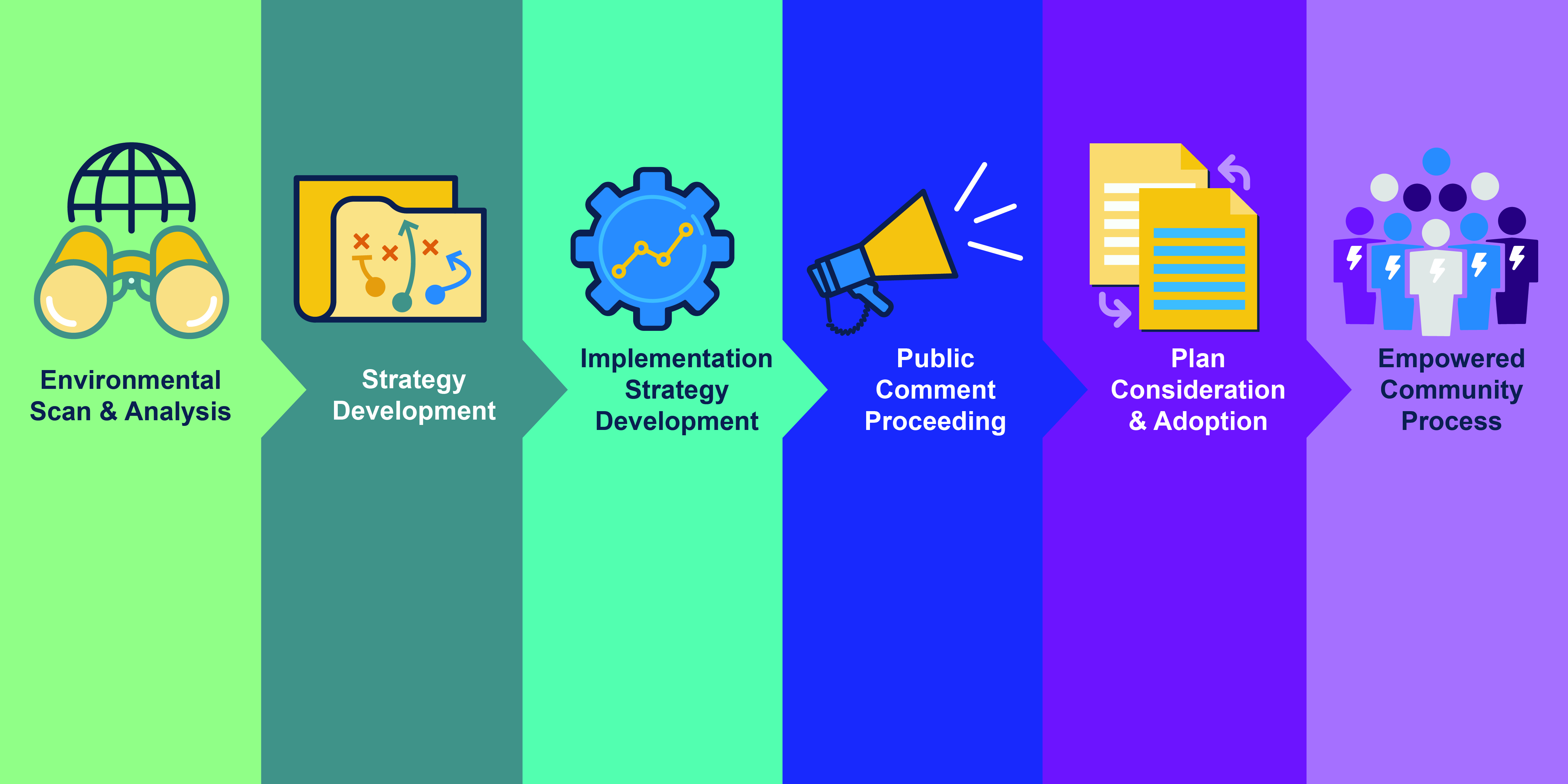
ICANN's strategic planning process is designed to be highly inclusive, with participation from across the ICANN ecosystem and beyond. The ICANN Board of Directors is responsible for strategic planning, with support from the ICANN community and organization. The strategic planning process for fiscal years 2026–2030 consists of six phases:
- Environmental Scan and Analysis: Stakeholders from across the ICANN ecosystem brainstorm to identify the internal strengths and weaknesses, as well as the external opportunities and threats, that affect ICANN's ability to fulfill its mission.
- Strategy Development: The Board uses the ideas and insights collected during Phase 1 to determine where ICANN is now and where it would like to be in the next five years. The resulting strategic objectives and goals form the basis of the Strategic Plan.
- Implementation Strategy Development: The Board collaborates with the ICANN Executive Team and community to determine how ICANN will achieve its strategic objectives and goals. These implementation strategies are used in developing the five-year Operating Plan.
- Public Comment: The Board solicits community feedback on the Draft Strategic Plan by publishing the draft for Public Comment. For a comprehensive view of how the Strategic Plan will be achieved, the Draft Five-Year Operating Plan is also published for Public Comment.
- Plan Consideration and Adoption: Based on the input received through the Public Comment proceeding, the Board revises the draft before considering and adopting the Strategic Plan.
- Empowered Community Process: After Board approval, the Empowered Community has 21 days to determine whether to raise a petition to reject the Strategic Plan. If no petition is raised, the new Strategic Plan will go into effect at the start of FY26. If the Empowered Community rejects the Strategic Plan, then the Board considers the reasons for rejection and proposes a revised plan for further community consideration.
Key Documents
Translated versions of ICANN Strategic Plan for Fiscal Years 2026 – 2030 (June 2025)
ICANN Strategic Plan for Fiscal Years 2026–2030, adopted by the Board at ICANN 82 (March 2025)
Revised Draft ICANN FY26–30 Strategic Plan for Board Consideration and Revision Summary (February 2025)
Public Comment Summary Report Draft ICANN Strategic Plan and Operating Plan Framework for FY26–30 (November 2024)
Draft ICANN FY26-30 Strategic Plan for Public Comments (July 2024)
Draft ICANN Operating Plan Framework for Public Comments (July 2024)
Draft ICANN FY26–30 Strategic Plan and Operating Plan Framework Supporting Visual Map (July 2024)
Draft Strategies as of 21 May 2024
Environmental Scan Analysis Report (July 2024)
Environmental Scan – Community Input (September-November 2023)
News and Updates
Visit the community workspace for more news and updates.
| Date | Update |
| 2 July 2025 | Launching the New Five-Year ICANN Strategic Plan |
| 28 April 2025 | Blog: ICANN 2030: Our New Strategic Plan |
| 22 April 2025 | Video: Launch of ICANN's Five-Year Strategic Plan |
| 13 March 2025 | Approved Resolutions | Regular Meeting of the ICANN Board | 13 March 2025 |
| 20 February 2025 | Blog: Community Feedback Shapes the Revised Draft of ICANN's 2026–2030 Strategic Plan |
| 31 October 2024 | Webinar: Draft FY26–30 Strategic Plan Update for ICANN81 Prep Week |
| 15 July 2024 | Announcement: We Need Your Input on the Draft FY26-30 Five-Year Strategic Plan and Operating Plan Framework |
| 27 May 2024 | Announcement: Get Involved in Shaping ICANN's Next Strategic Plan |
| 10 April 2024 | Blog: Update on the Next ICANN Strategic Plan |
| 6 November 2023 | Announcement: Participate in the Next Strategic Plan Environmental Scan Webinar |
| 26 September 2023 | Announcement: Join Us in Shaping ICANN's FY26-30 Strategic Plan |
| 11 September 2023 | Blog: ICANN Board Launches Strategic Planning Process for the Next Five Years |