
|
.NET Application Form |
RFP Part 1: General Applicant Information
1. Name and Address fields
The full legal name, principal address, telephone and fax numbers, and e-mail address of the applicant, and the URL of its principal World Wide Web site. Additionally, each applicant must provide the Application Deposit Receipt Number issued to the applicant upon ICANN's receipt of the wired funds for the application deposit.
| Organization Name: |
| |
| Address: |
| |
| Telephone: |
| |
| Fax: |
| |
| Email: |
| |
| Confirm Email: |
| |
| URL: |
| |
| Application Deposit Receipt Number: |
| |
2. Applicant's Business and Other Associated Activities
Provide a general description of the applicant's business and other activities currently or expected to be associated with the services described in this RFP.
| ||
3. Directors, Officers and other Key Staff
Provide the full names, positions and the qualification and experience of each of the following persons:
|
(i) the person or persons who will have direct
responsibility for the business operations of the registry, | ||
| ||
|
(ii) each person in the chain of command with decision
making authority from that person or persons to the principal executive
officer of the applicant, | ||
| ||
|
(iii) the top two financial officers of the
applicant, | ||
| ||
|
(iv) the person with the principal technical
responsibility for the operation of the registry, | ||
| ||
|
(v) each other executive or management person of the
applicant who will have significant policy making or operational influence
regarding the registry operations, | ||
| ||
|
(vi) all directors or persons with equivalent positions
for non-corporate entities, and | ||
| ||
|
(vii) identify any persons or entities who own or will own
or otherwise control, directly or indirectly, 5% or more of the
outstanding voting power held by all persons or entities entitled to
participate in the election (or other selection) of the applicant’s board
of directors or other governing body. | ||
| ||
|
The independent evaluators may seek additional information from applicants regarding the qualifications of personnel if deemed necessary. | ||
4. Applicant Organization Type
Provide the applicant's type of entity (e.g., corporation, partnership, etc.) and law (e.g., Denmark) under which it is or will be organized. Please state whether the applicant is for-profit or non-profit. If it is non-profit, please provide a detailed statement of its mission. Applicants should be prepared to submit articles of incorporation, or other similar organizational documents later in the evaluation process.
| ||
5. Number of Employees
Provide the number of employees currently employed by the applicant or to be employed concurrently with a selection as the successor registry operator.
| ||
6. Contact Person
Provide the name, telephone and fax number, and e-mail address of person to contact for additional information regarding this application. If there are multiple contacts, please list all their names, telephone and fax numbers, and e-mail addresses and describe the areas as to which each should be contacted.
| ||
RFP Part 2: Technical and Financial Information
The criteria by which the applicants will be evaluated are set forth below. Each criterion is labeled as either absolute or relative. Diagrams, charts and other similar material may be submitted in response to specific provisions where so indicated in the RFP as posted.
1. ICANN Policy Compliance
Criteria: The successor .NET registry operator must comply with all existing consensus policies of ICANN and must agree to comply with all future consensus policies of ICANN. This is an absolute criterion.
Describe in detail your method for implementing ICANN's Inter-Registrar Transfer Policy.
| ||
2. Equivalent Access for Registrars
Criteria: All ICANN-accredited registrars must be allowed to qualify to register names in .NET. The registry operator must treat all registrars that have qualified to operate as .NET registrars equivalently. This is an absolute criterion (except as described below regarding languages).
(a) Describe in detail your methods of providing registry services on an equivalent basis to all accredited registrars having registry-registrar agreements in effect. Your description should include any measures intended to make registration, technical assistance, and other services available to ICANN-accredited registrars in multiple time zones and multiple languages. Please include in your description the languages that you agree to support if you are selected as the .NET registry operator. Support in English is an absolute criterion. Support in additional languages is a relative criterion. In addition, describe the Registry Code of Conduct and other commitments you propose to make to ensure that all such registrars receive equivalent access to registry services. In preparing your response to this item, you may wish to refer to Appendices H and I of the registry agreements ICANN has entered into for other unsponsored TLDs (e.g., .biz, .com, .info, .name, .org and .pro).
|
(b) VeriSign, Inc., the current operator of the .NET registry uses a registry-registrar protocol (RRP) documented in RFC 2832. At the time of the transition, the selected successor operator will be required to continue to support the RRP (unless a migration of registrars in .NET to another protocol has already been completed by that time). In addition, the selected successor operator will be required to implement support for Version 1.0 of the Extensible Provisioning Protocol as specified in RFC's 3730, 3731, 3732, 3733, 3734, and 3735. Provide a detailed description of your plan for supporting RRP at the time of transition, for supporting EPP 1.0, and for providing registrars with a smooth, low-cost migration path from RRP to EPP.
| ||
The applicant's response to Part 2, Section 3 will remain confidential to ICANN and the independent evaluators. ICANN will use reasonable efforts to avoid publication or release of this information, but in no circumstance will ICANN's liability for any release of this information exceed the amount of the application fee.
3. Registry Operations
Criteria: The successor .NET registry operator must provide name registration within the time specified in the Appendix D to the existing .NET registry operator agreement. This is an absolute criterion. The ability to provide additional registry services and/or the ability to provide name registration faster than the specifications on Appendix D are relative criteria. An assessment of this ability will include the evaluators’ assessment of the factors described below.
(a) Provide a full description of all registry services you propose to provide and demonstrate your technical and legal ability to provide them, including your prior experience offering these or similar services. If you propose to offer any registry services that you believe are not now offered, include for such services your assessment of the benefits and burdens associated with such new services, as those benefits and burdens apply to registrants and registrars. In addition, describe the technical components and aspects of the planned registry services, and how you will support the same.
|
(b) To enable the evaluators to assess your capability (both technical and financial) to deliver the registry services you propose to provide, please include the following information:
|
(i) A detailed description of your current business
operations, including (A) core capabilities in registry/database and
Internet related operations and (B) the services and products you
currently offer, with data on how long you have offered them on the
current scale. To the extent this description does not fully capture your
ability to provide the registry services you propose to offer, add the
appropriate supplementary information to fully describe that
ability. | ||
| ||
|
(ii) Whether you currently provide any domain name
registration services and describe such services. | ||
| ||
|
(iii) A description (including location) of facilities
(including available network capacity) available to house staff and
equipment necessary to operate the registry. | ||
| ||
4. Revenue and Pricing Model; Financial Strength and Stability
Criteria: Each applicant must demonstrate sufficient financial strength and stability, based upon its existing financial condition and its proposed business model for operation of the registry, to provide reasonable certainty that it will be able to fulfill its obligations over the life of the .NET registry agreement. This is an absolute criterion. In building their financial and pricing models, applicants should assume that the following fees will be payable: (i) an annual fee to ICANN of US$132,000 for the first year, increasing by no more than 15% each year thereafter and (ii) registry-level transaction fees totaling non-refundable amounts of US$0.75 for each annual increment of an initial domain name registration and US$0.75 for each annual increment of a domain name re-registration registered by a registrar (in addition to preexisting fee obligations payable annually by registrars to ICANN), to be allocated equally to the following three purposes: (a) a special restricted fund for developing country Internet communities to enable further participation in the ICANN mission by developing country stakeholders, (b) a special restricted fund to enhance and facilitate the security and stability of the global Internet’s system of unique identifiers, and (c) general operating funds to support ICANN's mission to ensure the stable and secure operation of the global Internet's systems of unique identifiers. The per-name price charged to registrars is a relative criterion, with lower committed prices being preferable to higher prices.
All applicants should note that registration fees paid to VeriSign prior to the actual transfer of operational responsibility will not be transferred to a subsequent registry operator.
(a) Provide the following financial statements for the applicant (or, if the applicant is a wholly owed subsidiary of another entity, for the applicant and such other entity on a consolidated basis): three years of financial statements (including balance sheet, income statement, cash flow statement and statement of stockholders’ equity), audited by an independent accounting firm and prepared in accordance with either U.S. generally accepted accounting principles or the International Accounting Standards. Applicants who do not have such audited financial statements may substitute such other information and statements about their operations that are reasonably equivalent to such financial statements. The independent evaluators will be responsible for determining whether such information and statements are sufficiently equivalent to allow the evaluators to conduct an evaluation of the applicant’s financial strength comparable to the evaluation conducted on those applicants who do submit the requested financial statements.
|
(b) Provide the applicant's business plan for the operation of the registry, including:
|
(i) a detailed description of all revenue or commercial
benefit to be derived from or related to your operation of the registry,
including but not limited to details of the expected or anticipated
revenue and the assumptions about prices charged for services to be
offered, and anticipated demand for those services at high, medium and low
levels; | ||
| ||
|
(ii) staffing model, showing the number and types of
employees needed at the various levels of demand and the expenses
associated with that staff. Include information on (A) applicant’s hiring
policy and training programs (for both new and continuing staff), (B)
staffing level to handle both expected and unexpected volume levels, and
react to unplanned outages, infrastructure vulnerabilities and security
breaches and (C) customer service staff to support on a 24 hour basis in
multiple languages; | ||
| ||
|
(iii) expense model, incorporating both the staffing
expenses described above and all other anticipated expenses of the
operating the registry; | ||
| ||
|
(iv) property, plant and equipment
budget; | ||
| ||
|
(v) a projection for the sources and uses of cash, showing
the applicant's current cash available and the sources of cash available
to applicant in the future to fund operating and capital
expenditures. | ||
| ||
5. Technical Competence
Criteria: The .NET registry operator must meet the specifications of the current .NET registry contained in the following sections of the current .NET registry agreement listed below (if a “thick registry” model is being proposed by applicant, the specifications for the current .org agreement, rather than the current .NET agreement, shall apply in the case of Appendices O, P and Q). This is an absolute criterion. The degree to which applicant’s proposal commits applicant to exceed these specifications shall be relative criteria:
Appendix C.4, Name server Functional Specifications
The publicly accessible domain name service for the .net zone supports at least the following RFCs: RFC 1034, RFC 1035, RFC 1982, RFC 2181, RFC 2671, RFC 3226, RFC 3425 and RFC 3596. Although they do not directly concern the DNS protocol, RFC 3490, RFC 3491 and RFC 3492 are also supported. For internal purposes (not relevant to Internet users), RFC 1995, RFC 1996, RFC 2136 and RFC 2931 are supported. CORE++ will implement RFCs that result from the emerging DNSSECbis standard. Also, CORE++ will implement future RFCs that are applicable to the domain name service of the .net zone. |
Appendix C.5, Patch, Update, and Upgrade Policy
  Definitions

The software used by CORE++ to operate the .net registry is subject to
continuous development, driven by the requirement of new features, changed
registry policies and business practices on the one hand and the elimination of
identified issues on the other hand. The results of this development have to be
deployed on the production and OT+E registry systems as soon as they are found
mature by internal quality assurance processes. For this purpose, CORE++ will --
depending on the nature and the impact of the changes -- apply one of the actions
defined as follows:

  * Patch: A patch means a minor modification for the purpose of error
    correction. Patches do not require corresponding changes to client
    applications developed, implemented and maintained by each registrar.

  * Update: An update means a new release of the software which may contain
    error corrections, minor enhancements and -- in certain circumstances -- major
    enhancements. Updates may require changes to client applications by each
    registrar in order to take advantage of the new features and/or capabilities
    and to continue to have access to the Shared Registration System.

  * Upgrade: An upgrade means a new release of the software which involves the
    addition of substantial or substantially enhanced functionality. Upgrades
    require changes to client applications by each registrar in order to take
    advantage of the new features and/or capabilities and to continue to have
    access to the Shared Registration System.


A version number is assigned to each release of the software (emerging from a
patch, an update or an upgrade). The version number consists of three numbers
separated by dots, where the first number is incremented for each upgrade, the
second for each update and the third for each patch.


  Deployment Methodology

The SRS is designed to allow for uninterrupted service even during the
deployment of new software by usage of multiple, redundant systems that are
taken off-line and patched one after the other. Depending on the extent and
nature of the involved patch, update or upgrade, the deployment may therefore
not have impact on the external availability of the SRS and other components.


  Announcements

For patches, updates and upgrades that have impact on registrars, CORE++ will
give each registrar notice at least 60 days prior to deploying the updates and
upgrades into the production environment. Such notice will include an initial
thirty days' notice before deploying the update (if it requires changes to
client applications) or the upgrade into the Operational Test and Evaluation
(OT+E) environment to which all registrars have access. CORE++ will maintain the
update or upgrade in the OT+E environment for at least thirty days, to give each
registrar the opportunity to modify its client applications and complete testing
before implementing the new code in the production environment.
|
Appendix D, Performance Specifications
  SRS Performance

Maximum processing time read operations per object:          250 ms
Maximum processing time write operations per object:         500 ms
Maximum processing time of a token:                          250 ms
The term 'object' relates to a contact, host or domain. Some EPP commands allow
the specification of multiple objects (e.g. the "check" command). In this case,
the guaranteed processing time for the command results from the given value
multiplied with the number of objects. In respect to the current .net registry
agreement, a "check" is considered as a read operation, while an "add" is
considered as a write operation.

For the Protected Registration Service, so-called tokens are used to authorize
an operation. The evaluation of the associated privileges requires additional
processing time for each involved token. The time has to be added to the maximum
processing time for the involved write operations.

The processing time is measured from the arrival of the request at the SRS to
the delivery of the response. This excludes any network latency CORE++ and its
service providers are not responsible for.


  SRS Outages

Total outage:                  8 hours/month
Unplanned outage:              4 hours/month
Major upgrade outage:         12 hours/month (may occur twice a year)

  DNS Performance

Maximum round-trip time:                  300 ms
Maximum packet loss:                       10 %
Maximum update delay:                      15 min

  DNS Outages

Total duration of service unavailability:  120 min/month
                                           (99.73% availability)
Total duration of unplanned outage time:    30 min/month
                                           (99.93% availability)

  Whois Performance

Maximum response time for non-wildcard queries:    500 ms
Maximum update delay:                               10 min
The response time is measured from the arrival of the request at the Whois
server to the delivery of the response. This excludes any network latency CORE++
and its service providers are not responsible for.


  Whois Outages

Total outage:                              8 hours/month
Unplanned outage:                          4 hours/month
|
Appendix E, Service-Level Agreement
This service level agreement is based on the current .net registry agreement,
but updated to accommodate the plans of CORE++ for the .net registry. It
provides means to measure the registry performance and defines how registrars
are credited if CORE++ should not meet the defined service levels.

A) Definitions

  * 1) The term "monthly timeframe" is defined as a single calendar month
    beginning and ending at 00:00 UTC.

  * 2) The term "planned outage" defines the inavailability of the shared
    registry system ("SRS") due to pre-announced maintenance. The so-called
    "planned outage period" is a predefined time slot where planned outages are
    scheduled under normal conditions. The designated time period is 6:00 to
    14:00 UTC on Sundays, but is subject to change after respective notice to
    the registrars. There will be no more than 8 hours of planned outage per
    month and no more than 4 hours per calendar week. Two additional so-called
    "extended planned outages" of up to 12 hours each (extending the planned
    outage period) may be scheduled within a year. These represent the total
    allowed planned outages for the respective month, i.e. no other planned
    outages are to be scheduled in this month.

  * 3) The "SRS availability" is defined as the time when the SRS is fully
    operational. This is e.g. not the case during planned outages or extended
    planned outages.

  * 4) The "SRS unavailability" is defined as a failure of systems within the
    responsibility of CORE++ or its service provides that causes the registrar
    to be unable to either:

      * a) establish an RRP or EPP session with the registry system as defined
        in the RFCs 3632, 3730, 3734

      * b) execute at least 95% of the commands within the assured performance
        as defined in appendix D during each monthly timeframe.

  * 5) The term "unplanned outage time" denotes all of the following:

      * a) the amount of time between the confirmation of a registrar's claim of
        SRS unavailability by opening a trouble ticket at CORE++ and the point
        in time where the problem has been declared as resolved by both the
        registrar and CORE++. Such a case will be considered as an SRS
        unavailability for the individually impacted registrar only.

      * b) the amount of time between the first confirmation of an SRS
        unavailability affecting all registrars by opening a trouble ticket at
        CORE++ and the point in time where the problem has been declared as
        resolved by the registry.

      * c) the amount of time that planned outages or planned extended outages
        exceed the limits as defined in A.2.

      * d) the amount of time that planned outages or planned extended outages
        occur outside the planned outage period as defined in A.2.

  * 6) The "monthly unplanned outage time" is defined as the sum of all
    unplanned outage times during the monthly timeframe. The unplanned outage
    time diminishes the available monthly planned outage time by up to 4 hours.

  * 7) "Whois service" denotes the CORE++ Whois server using either the Whois or
    the emerging IRIS protocols as described in appendix O.

  * 8) ".net name servers" means all name servers that are either operated by
    CORE++ or its service providers for the purpose of hosting the .net zone.


B) Responsibilities of CORE++ and .net registrars

  * 1) A registrar must report each occurrence of an alleged SRS unavailability
    to the CORE++ support staff by one of the offered communication means (e-
    mail, fax, phone, trouble ticket system web interface) in order for the
    occurrence to be treated as an SRS unavailablitity in terms of this SLA.

  * 2) Should all registrars be affected by an SRS unavailability, CORE++ is
    obliged to open a corresponding trouble ticket and to notify all registrars
    of the ticket and its details immediately.

  * 3) Both registrar and CORE++ agree to determine the cause of an alleged SRS
    unavailability using reasonable commercial good faith efforts. If it is
    mutually acknowledged to be caused by CORE++, the duration of the issue will
    be counted as unplanned outage time.

  * 4) In order to verify that RRP/EPP sessions can be established and that
    RRP/EPP commands can be successfully performed, CORE++ will continuously
    monitor the SRS from at least two external locations.

  * 5) A registrar must inform CORE++ whenever its estimated volume of
    transactions will exceed the registrar's previous month's volume by more
    than 25% (not counting "check domain" commands). Should the registrar fail
    to do so, and the registrar's volume increases by 25% or more over the
    previous month, and should the total volume of transactions of all
    registrars for that month exceed the registry's actual volume of the
    previous month's transactions by more than 20%, then the registrar will not
    be eligible for any SLA credits (as defined in section C) in that monthly
    timeframe. The Registrar must submit its forecast at least 30 days prior to
    the first day of the next month. CORE++ agrees to supply transaction summary
    reports on a monthly basis.

  * 6) CORE++ will notify registrars of planned outages outside of the planned
    outage period at least 7 days in advance. Moreover, reasonable commercial
    good faith efforts will be made to inform registrars about possible upcoming
    planned outages within a 30-day advance schedule.

  * 7) CORE++ will provide a Whois service with a maximum update delay of 10
    minutes. Registrars will be notified in advance in case of changes to the
    Whois service update schedule.

  * 8) CORE++ will allow external monitoring of the SRS via means acceptable for
    both the registrar and CORE++.

  * 9) CORE++ will perform a near-real time update of its name servers. The
    results of an RRP/EPP write operations shall be visible on the .net name
    servers no later than 15 minutes after the completion of the operation.
    Registrars will be notified in advance in case of changes to this mode of
    operation. Notifications will also be sent to announce scheduled
    maintenances and unavailabilities of the .net name servers.

  * 10) In the event of a force majeure, CORE++ will use commercial reasonable
    efforts to restore the critical parts of the SRS within 24 hours and to
    restore full system functionality within 48 hours. Outages caused by a force
    majeure will not be considered as SRS unavailability in terms of this SLA.

  * 11) CORE++ agrees to deliver weekly system performance and availability
    reports. These reports will provide average round trip for the RRP/EPP
    "check" and "add" rsp. "create" domain commands for all registrars and
    information on the availability of the SRS during the previous week.

  * 12) CORE++ will provide an SRS availability of 99.45% during each monthly
    timeframe.


C) Credits:

Should the SRS availability drop below 99.45% in any monthly timeframe, CORE++
will grant a credit to affected registrars who have complied with Sections B.1
and B.5 above as follows:

  * (i) If an SRS unavailability as described in A.4.b occurred, a credit will
    be given for the combined % total RRP "add", EPP "create" and RRP/EPP
    "check" commands dropping below the denoted 95% performance threshold.

    For each affected registrar, the credit will be determined by multiplying
    the % below 95% by the registrar's monthly add/create domain volume times
    the average initial registration price charged to that registrar during the
    month. The maximum credit granted to each registrar shall not exceed 5% of
    the registrar's total monthly add/create domain volume times that average
    registration price.


  * (ii) If an SRS unavailability as described in A.4.a occurred, CORE++ will
    grant a credit to the registrar by multiplying the registrar's monthly
    add/create domain volume (based on the monthly timeframe when the unplanned
    outage began) times the average initial registration price charged to that
    registrar during the month and multiplying that product by the percentage of
    time that the monthly unplanned outage time exceeded 0.55% of the monthly
    timeframe. The maximum credit given to each registrar in this context shall
    not exceed 10% of the registrar's total monthly add/create domain volume
    times the charged average registration price.


Under no circumstances will credits be granted due to availability problems
caused by network providers and/or the systems of individual registrars.
|
Appendix O*, Whois Specification – Public Whois
CORE++ operates an information service where data about domains, contacts, hosts
and registrars can be inquired by the public, generally known as "Whois"
service. This information service is provided via the "Whois" protocol on TCP
port 43 as well as via a web interface. However, CORE++ sees the future in the
CRISP/IRIS protocols. They represent the latest attempt -- after RWhois (RFC
2167) and Whois++ (RFCs 1834, 1835, 1913, 1914, 2957, 2958) -- to overcome the
many disadvantages of the aged Whois, initially described in RFC 812 and updated
in RFC 3912 at last. A testbed implementation during draft status will be
provided within the first half year after the start of the registry operation
and a final implementation no later than half a year after the drafts have been
declared as standards.


  General Whois Design

All instances of the Whois service operate on their own databases. This ensures
a load decoupling between the registry and the Whois servers. The database of a
Whois server is continuously synchronized with the registry's database via a VPN
connection. As soon as changes to the registry's database have been made
persistent, these changes are forwarded to all Whois servers. The Whois servers
update their own databases with the data and provide the new information to the
public. That way, changes to the registry will become visible on the Whois
server typically in less than a minute. In case of a communication problem or a
maintenance of the Whois server, changes that occurred since the last successful
update are automatically identified and transferred.

All implementations provide means to prevent excessive use by a single entity
("hammering" or data mining) in addition to general security precautions (e.g.
DoS attacks).


  Port 43 Service

As mentioned, the Whois protocol on port 43 is provided, as defined in RFC 3912.
Unfortunately, the protocol, with its original roots in the year 1982, defines
only the basic exchange between client and server. Any specification of input
and output formats are left out. This has led to a large number of different
output formats among the domain registries, and, due to the thin registry model,
among the registrars also. CORE++ does not believe in the need for another new
format. Therefore, resemblances of the input and output formats of the service
to existing Whois services are not by accident, but intentional. The format is
chosen by the "best current practice" and orientates itself on the needs of both
human beings and automated processing: Simple key-value pairs instead of a
beautifully formatted, but unparsable and not associatable representation,
unequivocal keys and systematic grouping. In fact, it is an extended
implementation of the Appendix O of the .org agreement with some clarifications.

Another aspect is internationalization. The registry supports so-called
"localized" address fields for contacts in addition to "internationalized" data
(see also RFC 3733). These fields may contain non-US-ASCII characters. Also, the
internationalized domain names (IDN) allow the use of non-US-ASCII characters.
To support transmission of such characters, an option exists that specifies an
alternative character set which should be used instead of the default US-ASCII
character set.


  Input Format Specification

The input to the Whois server consists of two parts: the options and the query
itself.

The following options are available:

  * the -C option allows to specify the character set for both input and output

  * the -L option selects the "localized" data in addition to the
    "internationalized" data of a contact, if available


If the -C option is specified, the Whois server expects a character set name as
the next token. The name must correspond to one of the IANA character set names.
Only a limited set of character sets is supported by the server. It can be
determined with the HELP query described below. At least US-ASCII and UTF-8 are
supported. If the specified character set is supported, the server tries to
reinterpret the octet sequence that has been sent as input via this character
set. If it succeeds, it continues processing, otherwise, an error response is
generated. The use of this option does not guarantee in general that all
characters that are intended to be sent to the client can properly be
represented. If during the conversion of the output to the specified character
set a character is found that cannot be represented, it is replaced with a
question mark. In addition, a comment is added to the output that notifies the
recipient of the response about this problem. Only the Unicode-based character
encodings are capable of representing all possible characters.

The registry fully supports the use of so-called "localized" and
"internationalized" data for contacts (see also EPP Contact Mapping, RFC 3733).
In the "international" version of the data, only characters from the US-ASCII
subset of Unicode may be used. As this basic set of Latin characters is known
worldwide, even in regions where other scripting systems are used, this
representation of contact data is considered suitable for international
interchange. In contrast to this, the "localized" version may contain any valid
Unicode character, including those that are not recognized outside the region
where the address is located. While the "international" version is mandatory,
the "localized" version is optional. With the -L option, the client can
influence which data is returned on queries. By default, always the
"international" version is returned. If the option is used, the "localized"
version is returned in addition to the "international" version, if it exists. To
differentiate between the two versions, different keys are used (also see
below).

By default, the Whois service searches for domain names. By the following
keywords, the search type can be determined:

Keywords (case insensitive)  | Type
-----------------------------|---------------------------------
do, domain                   | Search for domain objects.
                             | Either the "Domain Name",
                             | "Domain Name ACE" or
                             | "Domain ID" field is used
-----------------------------|---------------------------------
ho, host                     | Search for name server objects.
                             | Either the "Host Name",
                             | "Host Name ACE" or the "Host ID"
                             | field is used
-----------------------------|---------------------------------
contact                      | Search for contact objects in
                             | the "Contact ID" field
-----------------------------|---------------------------------
registrar                    | Search for registrar objects
                             | in the "Registrar ID" or
                             | "Registrar Organization" field
In addition, the following search options are available:

Keywords (case insensitive)  | Option
-----------------------------|------------------------------------------------
id                           | Search is performed in the respective ID field
-----------------------------|------------------------------------------------
ace                          | Search is performed in the respective ACE field
In general, domain names in the input are considered as being Internationalized
Domain Names (IDNs, as defined in section 2, "Terminology", RFC 3490). By using
the ace option, a given domain name is considered as being an ACE domain name.
The use of the option does not have an influence on the response.

The output can be controlled by the following keywords:

Keywords (case insensitive)  | Option
-----------------------------|------------------------------------------------
=, full                      | Always return the complete data,
                             | even if multiple entries are found
-----------------------------|------------------------------------------------
sum, summary                 | Always return summarized data,
                             | even if only a single entry is found
The last token in the input is taken as the search parameter. It may contain the
percent sign (`%') as a wild card for any number (including zero) of characters
or the underline character (`_') for a single character. The wild card
characters may not appear within the first three characters. If more than one
matching object is found, a summary report is returned by default. This behavior
can be modified by the options above. The number of objects returned is limited
to 50, both for data mining prevention and resource protection. Wild cards
cannot be used for ID searches.

If the search parameter is "help" and no object type is given, no search is
performed, but a short summary about the input format is returned.


  Output Format Specification

The results of the query are encoded using either the US-ASCII character set or,
if a valid character set has been specified via the -C option, the selected
character set. If the output contains characters for which no encoding does
exist, they are replaced with a question mark and a respective warning comment
is added to the beginning of the output:

% WARNING: THIS RESPONSE IS NOT AUTHENTIC
%
%          The selected character encoding "XXX" is not able to
%          represent all characters in this output. Those
%          characters that could not be represented have been
%          replaced with "?". Please resubmit your query with a
%          suitable character encoding in order to receive an
%          authentic response.
%
All lines are terminated by CR/LF pairs. Lines that contain comments, legal
notes or similar, start with a percent sign (`%'). If the output consists of
multiple objects, they are separated by at least one empty line. The objects
themselves (including the related subobjects, like referenced contacts of a
domain) do not contain empty lines. If no objects match the search query, "NOT
FOUND" is returned. The object data is composed of multiple key-value lines. Key
and value of a key-value pair are separated by a colon (`:'). The key may
contain space characters. For domain names that appear in the output, both the
IDN version and the ACE version are supplied, even if the IDN consists of LDH
characters only and is identical to the ACE representation. This applies to
names of domains and hosts as well as name server references in domains. It does
not apply to e-mail addresses (which contain domain names as part of the
address) in the contact data and to the Whois referral field that is supplied
for domains that are registered using the thin registry model.

Example:

...
Domain Name: grün.net
Domain Name ACE: xn--grn-ioa.net
...
Name Server: blau.example.net 192.0.2.1
Name Server: grün.example.net 192.0.2.2
Name Server ACE: blau.example.net 192.0.2.1
Name Server ACE: xn--grn-ioa.example.net 192.0.2.2
...
If the output contains contacts that contain localized data and the -L option
has been specified, a second set of address data is included. It contains the
same keys, but preceded by "Local ": The text is inserted after the role, if the
contact appears in a different object.

Example:

...
Admin ID: C394583
Admin Name: Francois Debreuil
Admin Organization:
Admin Street: 45, Rue de la Ville l'Eveque
Admin City: Orleans
Admin State/Province: Centre
Admin Postal Code: 45000
Admin Country: FR
Admin Local Name: François Debreuil
Admin Local Organization:
Admin Local Street: 45, Rue de la Ville l'Évêque
Admin Local City: Orléans
Admin Local State/Province: Centre
Admin Local Postal Code: 45000
Admin Local Country: FR
Admin Phone: +33.12345678
Admin Phone Ext:
Admin Fax: +33.87654321
Admin Fax Ext:
Admin Email: francois.debreuil@example.net
...
In the thin registry model, the registry does not maintain and is not
authoritative for the contact data of the domains. Instead, this is the duty of
the registrar. As a consequence, the Whois service cannot provide this
information. To enable the client to retrieve that data easily, additional
information about the registrar (that is part of the registrar object) are
provided instead.

Example:

...
Registrar ID: IANA-15
Registrar Name: CORE Internet Council of Registrars
Registrar Whois Server: whois.core.info
Registrar URL: http://www.corenic.net
...

  Domain Data Format

Depending on the query and options, either a short or a long format is produced.

Short format:

Domain ID: D38482
Domain Name: example.net
Domain Name ACE: example.net
Long Format (thick registry):

Domain ID: D38482
Domain Name: core-plusplus.net
Domain Name ACE: core-plusplus.net
Domain Language: en
Registrar ID: IANA-15
Created On: 2001-07-23 17:53:02 GMT
Last Updated On: 2002-11-01 09:21:47 GMT
Expiration Date: 2005-07-23 17:53:02 GMT
Status: ok
Registrant ID: C343238
Registrant Name: CORE Internet Council Of Registrars
Registrant Organization: CORE Internet Council Of Registrars
Registrant Street: WTC II, 29 route de Pre-Bois
Registrant City: Geneva
Registrant State/Province: Geneva
Registrant Postal Code: 1215
Registrant Country: CH
Registrant Phone: +41.229295744
Registrant Phone Ext:
Registrant Fax: +41.229295745
Registrant Fax Ext:
Registrant Email: secretariat@corenic.org
Admin ID: C343238
Admin Name: CORE Internet Council Of Registrars
Admin Organization: CORE Internet Council Of Registrars
Admin Street: WTC II, 29 route de Pre-Bois
Admin City: Geneva
Admin State/Province: Geneva
Admin Postal Code: 1215
Admin Country: CH
Admin Phone: +41.229295744
Admin Phone Ext:
Admin Fax: +41.229295745
Admin Fax Ext:
Admin Email: secretariat@corenic.org
Tech ID: C343238
Tech Name: CORE Internet Council Of Registrars
Tech Organization: CORE Internet Council Of Registrars
Tech Street: WTC II, 29 route de Pre-Bois
Tech City: Geneva
Tech State/Province: Geneva
Tech Postal Code: 1215
Tech Country: CH
Tech Phone: +41.229295744
Tech Phone Ext:
Tech Fax: +41.229295745
Tech Fax Ext:
Tech Email: secretariat@corenic.org
Billing ID: C343238
Billing Name: CORE Internet Council Of Registrars
Billing Organization: CORE Internet Council Of Registrars
Billing Street: WTC II, 29 route de Pre-Bois
Billing City: Geneva
Billing State/Province: Geneva
Billing Postal Code: 1215
Billing Country: CH
Billing Phone: +41.229295744
Billing Phone Ext:
Billing Fax: +41.229295745
Billing Fax Ext:
Billing Email: secretariat@corenic.org
Name Server: ns1.core-plusplus.net 192.0.2.1
Name Server: ns2.core-plusplus.net 192.0.2.2
Name Server ACE: ns1.core-plusplus.net 192.0.2.1
Name Server ACE: ns2.core-plusplus.net 192.0.2.2
Regarding the included contact data, see below also.

Long format (thin registry):

Domain ID: D38482
Domain Name: core-plusplus.net
Domain Name ACE: core-plusplus.net
Domain Language: en
Registrar ID: IANA-15
Registrar Name: CORE Internet Council of Registrars
Registrar Whois Server: whois.core.info
Registrar URL: http://www.corenic.net
Created On: 2001-07-23 17:53:02 GMT
Last Updated On: 2002-11-01 09:21:47 GMT
Expiration Date: 2005-07-23 17:53:02 GMT
Status: ok
Name Server: ns1.core-plusplus.net 192.0.2.1
Name Server: ns2.core-plusplus.net 192.0.2.2
Name Server ACE: ns1.core-plusplus.net 192.0.2.1
Name Server ACE: ns2.core-plusplus.net 192.0.2.2
In case that the domain is in the auction phase (see 2.3.(a) for details), the
following format is used:

Domain ID: D38482
Domain Name: example.net
Domain Name ACE: example.net
Domain Language: en
Status: pendingAuction
Bid Due Date: 2005-07-23 17:53:02 GMT

  Host Data Format

Short Format:

Host ID: H38473
Host Name: ns3.core-plusplus.net
Host Name ACE: ns3.core-plusplus.net
Long format:

Host ID: H38473
Host Name: ns3.core-plusplus.net
Host Name ACE: ns3.core-plusplus.net
Registrar ID: IANA-15
Created On: 2001-07-23 17:53:02 GMT
Last Updated On: 2002-11-01 09:21:47 GMT
Status: ok
IP Address: 192.0.2.3
IP Address: 3FFE:3273:1002::FE99:3BC7

  Contact Data Format

Short format, without localized data:

Contact ID: C394583
Name: Francois Debreuil
Short format, with localized data:

Contact ID: C394583
Name: Francois Debreuil
Local Name: François Debreuil
Full format, without localized data:

Contact ID: C394583
Status: ok
Name: Francois Debreuil
Organization:
Street: 45, Rue de la Ville l'Eveque
City: Orleans
State/Province: Centre
Postal Code: 45000
Country: FR
Phone: +33.12345678
Phone Ext:
Fax: +33.87654321
Fax Ext:
Email: francois.debreuil@example.net
Full format, with localized data:

Contact ID: C394583
Status: ok
Name: Francois Debreuil
Organization:
Street: 45, Rue de la Ville l'Eveque
City: Orleans
State/Province: Centre
Postal Code: 45000
Country: FR
Local Name: François Debreuil
Local Organization:
Local Street: 45, Rue de la Ville l'Évêque
Local City: Orléans
Local State/Province: Centre
Local Postal Code: 45000
Local Country: FR
Phone: +33.12345678
Phone Ext:
Fax: +33.87654321
Fax Ext:
Email: francois.debreuil@example.net
The actual published data depends on the registry policy and the contact's
disclosure settings (see RFC 3733). If data is not disclosed, the respective key-
value pair is omitted. In contrast, empty fields (like the organization in the
given example), are included. This allows the client to differentiate between
the two cases.


  Registrar Data Format

Registrar ID: IANA-15
Status: ok
Organization: CORE Internet Council Of Registrars
Street: WTC II, 29 route de Pre-Bois
City: Geneva
State/Province: Geneva
Postal Code: 1215
Country: CH
Phone: +41.229295744
Phone Ext:
Fax: +41.229295745
Fax Ext:
Email: secretariat@corenic.org
Whois Server: whois.core.info
URL: http://www.corenic.net
For ICANN-accredited registrars, the registrar ID is composed of the prefix
"IANA-" and the registrar ID as specified in the registrar list maintained by
IANA (http://www.iana.org/assignments/registrar-ids). Other administrative
accounts operated by the registry use a different prefix.


  Web Whois Service

The web Whois service shares the same functionality as the port 43 service, with
the exception that the input is implemented by using the means of HTML, i.e. by
text input fields, radio buttons and check boxes. The output format is the same
as described above. It is included in the HTML page in a way that it easily can
be copied by common browsers. To support the input and output of non-US-ASCII
characters, the service operates using the UTF-8 encoding.
|
Appendix P*, Whois Data Specification – Independent Whois Provider
CORE++ agrees to provide bulk access to Whois data, as described in the appendix
P of the .org registry agreement, dated 2002-10-23. It is recommended to review
the exact technical details of the agreement and to adjust them to the different
conditions of the proposed .net registry. Especially various aspects of the XML
document type definition (DTD) need to updated;

  * as the thin model is also supported, the specification of the registrant and
    administrative, technical and billing contacts should be made optional

  * the status and country code (cc) attributes should be changed to
    NMTOKENS/CDATA to be more forward compatible

  * the registrar element should be updated to reflect the data structure that
    is proposed for the Whois service

  * the TLD attribute should be changed to CDATA to allow other TLDs than "org"

  * to promote homogeneous nomenclature, it is suggested to rename "nameserver"
    to "host", except where the host is referenced as a name server in the
    domain.

  * The contact data should also carry the local data.


There are no changes required for IDN. As XML is fully Unicode compatible, it is
not a problem to include IDNs in the respective name fields of domains and
hosts. Other services, like DNSSEC, auction service or the protected
registration service do not add additional fields to the XML Whois output.

<!ELEMENT whois-data (domain | del-domain | host | del-host | contact |
del-contact | registrar | del-registrar)*>
<!ATTLIST whois-data
        tld NMTOKEN #REQUIRED
        date CDATA #REQUIRED
        type (full | incremental) #REQUIRED
        version CDATA #FIXED "1.1"
>
<!ELEMENT domain (domainname)>
<!ATTLIST domain
        dom-id NMTOKEN #REQUIRED
        registrar-id NMTOKEN #IMPLIED
        admin-id NMTOKEN #IMPLIED
        tech-id NMTOKEN #IMPLIED
        billing-id NMTOKEN #IMPLIED
        nameserver-ids NMTOKENS #IMPLIED
        status NMTOKENS #IMPLIED
        cre-date CDATA #REQUIRED
        exp-date CDATA #REQUIRED
        upd-date CDATA #REQUIRED
>
<!ELEMENT del-domain EMPTY>
<!ATTLIST del-domain
        dom-id NMTOKEN #REQUIRED
>
<!ELEMENT host (domainname, ip*)>
<!ATTLIST host
        host-id NMTOKEN #REQUIRED
        registrar-id NMTOKEN #REQUIRED
        status NMTOKENS #IMPLIED
        cre-date CDATA #REQUIRED
        upd-date CDATA #REQUIRED
>
<!ELEMENT del-host EMPTY>
<!ATTLIST del-host
        host-id NMTOKEN #REQUIRED
>
<!ELEMENT contact (addr, addr?, phone, fax, e-mail)>
<!ATTLIST contact
        contact-id NMTOKEN #REQUIRED
        registrar-id NMTOKEN #REQUIRED
        status NMTOKENS #IMPLIED
        cre-date CDATA #REQUIRED
        upd-date CDATA #REQUIRED
>
<!ELEMENT del-contact EMPTY>
<!ATTLIST del-contact
        contact-id NMTOKEN #REQUIRED
>
<!ELEMENT registrar (org, street, street?, street?, city, state, post-code,
country-code, phone, fax, e-mail, whois, url)>
<!ATTLIST registrar
        registrar-id NMTOKEN #REQUIRED
        status NMTOKENS #IMPLIED
        cre-date CDATA #REQUIRED
        upd-date CDATA #REQUIRED
>
<!ELEMENT del-registrar EMPTY>
<!ATTLIST del-registrar
        registrar-id NMTOKEN #REQUIRED
>
<!ELEMENT domainname (#PCDATA)>
<!ELEMENT ip (#PCDATA)>
<!ELEMENT addr (name, org, street, street?, street?, city, state, post-code,
country-code)>
<!ATTLIST addr
        type (intl | local) "intl"
>
<!ELEMENT name (#PCDATA)>
<!ELEMENT org (#PCDATA)>
<!ELEMENT street (#PCDATA)>
<!ELEMENT city (#PCDATA)>
<!ELEMENT state (#PCDATA)>
<!ELEMENT post-code (#PCDATA)>
<!ELEMENT country-code (#PCDATA)>
<!ELEMENT phone (#PCDATA)>
<!ATTLIST phone
        ext CDATA #IMPLIED
>
<!ELEMENT fax (#PCDATA)>
<!ATTLIST fax
        ext CDATA #IMPLIED
>
<!ELEMENT e-mail (#PCDATA)>
<!ELEMENT whois (#PCDATA)>
<!ELEMENT url (#PCDATA)>
|
Appendix Q*, Whois Data Specification – ICANN
CORE++ agrees to provide ICANN with bulk access to up-to-date Whois data. The
access schedule and procedures, as well as content and format of the provided
data, are depicted below. CORE++ further agrees to implement changes to this
appendix that may be specified by ICANN to conform to the IETF CRISP/IRIS
working group's protocol no later than 180 days after the IETF specification is
adopted as a proposed standard. CORE++ also encourages ICANN to complete the
current review process of the Whois service and implement in the near future a
policy that better takes into account the personal data protection rights of
individual domain name holders.


  Access Schedule

CORE++ will prepare a complete set of Whois bulk data on a weekly basis. It
reflects the state of the registry as of 00:00 UTC on each Sunday (unless a
different day is designated by ICANN).


  Content

The Whois bulk data sets consist of the objects and contents specified in
Appendix P, "Whois Bulk Data Provisioning".


  Data Format Specification

The Whois bulk data sets will be UTF-8 encoded XML files conforming to the
document type definition specified in Appendix P, "Whois Bulk Data
Provisioning".


  Access Procedures

According to the schedule described above, CORE++ will prepare and provide the
Whois data sets in the following manner (depending on the agreement between
CORE++ and ICANN, details of the process may be subject to change):

 1. The XML file representing the Whois data is created using the data format
    specification above. The resulting file shall be named "wf<yy><mm><dd>",
    where "<yy>", "<mm>" and "<dd>" are two-digit decimal numbers representing
    the year, the month and the day, respectively. Single-digit numbers are left-
    padded with a zero.

 2. CORE++ may optionally split the resulting file in order to produce files
    with a maximum size of 1 GB each. In case of such a split, an additional
    file containing MD5 digests of the files must be included to facilitate
    error isolation in case of transfer fault.

 3. The bulk data file(s) are encrypted using ICANN's public PGP key and signed
    using the private PGP key used by CORE++ for this purpose. Appropriate key
    lengths will be used to provide suitable security. In the course of
    encrypting and signing, the files are also compressed. The exchange of
    public PGP keys between CORE++ and ICANN will be carried out with
    appropriate security precautions.

 4. Once prepared, the files are made available for download by ICANN. Secure
    and authenticated methods like Secure FTP (sftp) or HTTPS will be used for
    this purpose. The data sets will be available from 08:00 UTC on the day to
    which they relate until the next data set becomes available. As an
    alternative to the download, ICANN may opt to receive the data sets on DDS-4
    tapes or similar media specified by ICANN. CORE++ will send the media to
    ICANN by expedited delivery service. Arrival at ICANN will be scheduled no
    later than the fourth calendar day following the day the data set relates
    to.
|
Appendix R, Data Escrow Specification
CORE++ agrees to establish an escrow account with a data escrow provider in
order to deposit, on a regular basis, a complete set of registry data in an
electronic format agreed upon by CORE++ and ICANN. The data format supplies
sufficient information to permit a complete restoration of the registry's data
repository in case of data loss at both the registry's main and mirror SRS
sites.

The escrow provider will be supplied with both complete and incremental registry
data regularly, using the deposit schedule specified below. Measures will be
taken which enable the data escrow provider to verify the integrity of the
received data, i.e. that the data is complete, accurate and delivered in the
specified format.


  Deposit Schedule

Registry data sets will be electronically transmitted to the escrow provider in
a secure way on a weekly and daily basis as follows:

  * Weekly Escrow Deposits: CORE++ will deposit a complete set of registry data
    into escrow on a weekly basis. This is done by transmitting a snapshot of
    each operational registrar's data to the escrow provider in the specified
    format. The snapshot captures the state of each registrars's data (i.e., its
    domains, hosts, contacts as well as other relevant data) at the time when
    the snapshot was created. It reflects the state of the registry as of 00:00
    UTC on each Sunday. Transactions pending at the time of the snapshot will
    not be included. The snapshot will be transferred to the escrow provider
    within a four-hour window starting at 04:00 UTC on the same Sunday.

  * Daily Escrow Deposits: CORE++ will deposit incremental registry data into
    escrow on a daily basis. This is done by transmitting a transaction log for
    each operational registrar to the escrow provider in the specified format.
    The log represents all transactions (like domain creations, updates or
    deletions) that occurred since the most recent full or incremental deposit.
    Each daily incremental deposit will contain transactions that have been
    committed between the last full or incremental deposit and 00:00 UTC on the
    day the incremental deposit is related to. Transactions pending at this time
    will not be included. The incremental deposit will be transferred to the
    escrow provider within a four-hour window beginning at 04:00 UTC on the
    respective day. No daily escrow deposit is done on Sundays, since the
    involved data is covered by the weekly escrow deposit.


  Deposit Data Format Specification

As stated above, the data format used for escrow purposes will be chosen with
mutual approval by CORE++ and ICANN. As a basis for the data format to be agreed
upon, CORE++ suggests the following escrow data format specification.

The devised XML format is designed to represent both complete and incremental
registry data sets. The following DTD that describes valid data dumps is an
extension of the DTD for the Whois bulk data provisioning with the following
properties:

  * The full escrow describes a snapshot of the given date, while the
    incremental escrow represents a transaction log. In the full escrow, only
    the "domain", "host", "contact" and "registrar" elements appear, while in
    the incremental escrow, the other elements may also appear.

  * For the incremental escrow, three additional attributes are specified: the
    "actor" denotes the entity that caused the modification. This is either a
    registrar ID, the ID of a support staff member or the name of an internal
    process of the SRS that performed the modification automatically (like auto-
    renew). The "timestamp" documents the point in time when the modfication has
    taken place. The "txn" is an identifier that further details the precise
    activity.

  * To allow a differentiation between the creation and updates of an object
    within an incremental escrow, the "domain", "host", "contact" and
    "registrar" elements contain an "action" attribute that provides this
    information.


Due to the fact that CORE++ grants .net registrars the option to remain within
the "thin" registry model for all or a fraction of their domains (not obligating
them to supply contact data to the registry), the supplied escrow data will not
contain contact information for all .net domains, but only for those domains
which have been associated with contact data in the repository.

<?xml version="1.0" encoding="UTF-8"?>
<!ELEMENT esrow-data (domain | del-domain | tr-domain | renew-domain | host |
del-host | contact | del-contact | registrar | del-registrar)*>
<!ATTLIST escrow-data
        tld NMTOKEN #REQUIRED
        date CDATA #REQUIRED
        type (full | incremental) #REQUIRED
        version CDATA #FIXED "1.0"
>
<!ELEMENT domain (domainname)>
<!ATTLIST domain
        dom-id NMTOKEN #REQUIRED
        registrar-id NMTOKEN #IMPLIED
        admin-id NMTOKEN #IMPLIED
        tech-id NMTOKEN #IMPLIED
        billing-id NMTOKEN #IMPLIED
        nameserver-ids NMTOKENS #IMPLIED
        status NMTOKENS #IMPLIED
        period CDATA #IMPLIED
        cre-date CDATA #REQUIRED
        exp-date CDATA #REQUIRED
        upd-date CDATA #REQUIRED
        xfer-date CDATA #REQUIRED
        action (create | update) #IMPLIED
        actor NMTOKEN #IMPLIED
        timestamp CDATA #IMPLIED
        txn CDATA #IMPLIED
>
<!ELEMENT del-domain EMPTY>
<!ATTLIST del-domain
        dom-id NMTOKEN #REQUIRED
        actor NMTOKEN #REQUIRED
        timestamp CDATA #REQUIRED
        txn CDATA #REQUIRED
>
<!ELEMENT tr-domain EMPTY>
<!ATTLIST tr-domain
        dom-id NMTOKEN #REQUIRED
        registrar-id NMTOKEN #IMPLIED
        xfer-date CDATA #REQUIRED
        actor NMTOKEN #REQUIRED
        timestamp CDATA #REQUIRED
        txn CDATA #REQUIRED
>
<!ELEMENT renew-domain EMPTY>
<!ATTLIST renew-domain
        dom-id NMTOKEN #REQUIRED
        period CDATA #IMPLIED
        exp-date CDATA #REQUIRED
        actor NMTOKEN #REQUIRED
        timestamp CDATA #REQUIRED
        txn CDATA #REQUIRED
>
<!ELEMENT host (domainname, ip*)>
<!ATTLIST host
        host-id NMTOKEN #REQUIRED
        registrar-id NMTOKEN #REQUIRED
        status NMTOKENS #IMPLIED
        cre-date CDATA #REQUIRED
        upd-date CDATA #REQUIRED
        action (create | update) #IMPLIED
        actor NMTOKEN #IMPLIED
        timestamp CDATA #IMPLIED
        txn CDATA #IMPLIED
>
<!ELEMENT del-host EMPTY>
<!ATTLIST del-host
        host-id NMTOKEN #REQUIRED
        actor NMTOKEN #REQUIRED
        timestamp CDATA #REQUIRED
        txn CDATA #REQUIRED
>
<!ELEMENT contact (addr, addr?, phone, fax, e-mail)>
<!ATTLIST contact
        contact-id NMTOKEN #REQUIRED
        registrar-id NMTOKEN #REQUIRED
        status NMTOKENS #IMPLIED
        cre-date CDATA #REQUIRED
        upd-date CDATA #REQUIRED
        action (create | update) #IMPLIED
        actor NMTOKEN #IMPLIED
        timestamp CDATA #IMPLIED
        txn CDATA #IMPLIED
>
<!ELEMENT del-contact EMPTY>
<!ATTLIST del-contact
        contact-id NMTOKEN #REQUIRED
        actor NMTOKEN #REQUIRED
        timestamp CDATA #REQUIRED
        txn CDATA #REQUIRED
>
<!ELEMENT registrar (org, street, street?, street?, city, state, post-code,
country-code, phone, fax, e-mail, whois, url)>
<!ATTLIST registrar
        registrar-id NMTOKEN #REQUIRED
        status NMTOKENS #IMPLIED
        cre-date CDATA #REQUIRED
        upd-date CDATA #REQUIRED
        action (create | update) #IMPLIED
        actor NMTOKEN #IMPLIED
        timestamp CDATA #IMPLIED
        txn CDATA #IMPLIED
>
<!ELEMENT del-registrar EMPTY>
<!ATTLIST del-registrar
        registrar-id NMTOKEN #REQUIRED
        actor NMTOKEN #REQUIRED
        timestamp CDATA #REQUIRED
        txn CDATA #REQUIRED
>
<!ELEMENT domainname (#PCDATA)>
<!ELEMENT ip (#PCDATA)>
<!ELEMENT addr (name, org, street, street?, street?, city, state, post-code,
country-code)>
<!ATTLIST addr
        type (intl | local) "intl"
>
<!ELEMENT name (#PCDATA)>
<!ELEMENT org (#PCDATA)>
<!ELEMENT street (#PCDATA)>
<!ELEMENT city (#PCDATA)>
<!ELEMENT state (#PCDATA)>
<!ELEMENT post-code (#PCDATA)>
<!ELEMENT country-code (#PCDATA)>
<!ELEMENT phone (#PCDATA)>
<!ATTLIST phone
        ext CDATA #IMPLIED
>
<!ELEMENT fax (#PCDATA)>
<!ATTLIST fax
        ext CDATA #IMPLIED
>
<!ELEMENT e-mail (#PCDATA)>
<!ELEMENT whois (#PCDATA)>
<!ELEMENT url (#PCDATA)>

  Escrow Transfer Process

According to the schedule described above, CORE++ will prepare and transfer the
escrow data deposit files in the following manner (depending on the agreement
between CORE++ and ICANN, details of the process may be subject to change):

 1. The XML file representing the complete/incremental deposit is created using
    the data format specification above. The resulting file shall be named
    "net<seqn>", where "<seqn>" is a four-digit decimal number that is
    incremented for each deposit.

 2. The deposit file is processed by a program (provided by ICANN) that verifies
    the file's compliance with the data format specification and counts the
    number of objects of the various types in the deposit. A report of the
    program's results is appended to the deposit.

 3. CORE++ may optionally split the resulting file in order to produce files
    with a maximum size of 1 GB each. In case of such a split, an additional
    file containing MD5 digests of the files must be included to facilitate
    error isolation in case of transfer fault.

 4. The deposit file(s) are encrypted using the escrow agent's public PGP key
    and signed using the private PGP key used by CORE++ for this purpose.
    Appropriate key lengths will be used to provide suitable security. In the
    course of encrypting and signing, the files are also compressed.

 5. The resulting deposit files are sent to the escrow agent's FTP server within
    the time window specified above.


  Escrow Verification Procedures

The escrow agent will verify the integrity of each received deposit in the
following manner:

 1. At the end of the deposit window, the received deposit files are moved to an
    area that is not publicly accessible. The presence and size of each file is
    logged.

 2. Each deposit file will be decrypted using the escrow agent's private PGP key
    and authenticated using the public PGP key used by CORE++ for this purpose.
    This step also decompresses the files.

 3. If multiple files have been delivered, they are properly concatenated.

 4. The escrow agent will run a program that checks the format, the number of
    objects of each type and the overall consistency of the data. The results
    are compared to the report that was appended when the deposit was created by
    CORE++. The outcome of this comparison is used to generate a "deposit format
    and completeness report", which will then be encrypted using ICANN's public
    PGP key and signed using the escrow agent's private PGP key; again, this
    includes compression of the data.

 5. The decrypted deposit files are destroyed to minimize the probability of
    disclosure to unauthorized parties.

The exchange of public PGP keys between the parties involved in the procedures
described above will be carried out with appropriate security precautions.
|
Along with providing the information requested below, the applicant should include its own proposed versions of appendices C, D, E, O, P, Q, and R based on the current .NET registry agreement <http://www.icann.org/tlds/agreements/verisign/net-index.htm> which the applicant would be willing to have included in the subsequent .NET registry agreement. Applicants should ensure that their proposed versions of these appendices include any relevant subsequent updates to the RFCs referenced in these appendices. For example, RFC1035 as listed in Appendix C4 has been updated by RFC2845 and RFC3645, among other updates.
(a) Outline your technical capabilities. Provide a description of your technical capabilities, including information about key technical personnel (qualifications and experience), size of technical workforce and access to systems development tools. Outline any significant prior technical achievements.
|
(b) Technical plan and capabilities for the proposed registry operations. In certain sections of the web-based form, applicants are permitted to make non-textual submissions together with, and as part of, their application (e.g., graphs, flowcharts, models and diagrams). Present a technical plan and capabilities outline for the proposed registry operations. The technical plan should address the following factors:
|
(i) General description of proposed facilities and
systems. Describe all system locations. Identify the specific types of
systems being used, their capacity and interoperability, general
availability and level of security of technical environment. Describe in
appropriate detail buildings, hardware, software systems, environmental
equipment and Internet connectivity. | ||
 | ||
|
(ii) Stability of resolution and performance capabilities, including: response times and packet loss targets; availability of authoritative name servers; processes, tools and automated monitoring to ensure accuracy of zone data for resolution; diversity of DNS infrastructure; diversity and redundancy of network and DNS infrastructure to handle bandwidth congestion and network failures of ISPs and host providers. | ||
| ||
|
(iii) Operational scalability sufficient to handle existing registry database and projected growth; DNS queries including peak periods and projected growth; DDoS attacks, viruses, worms and spam; and restart capabilities. | ||
 | ||
|
(iv) Describe the registry-registrar model and protocol; availability of a shared registration system, including processing times for standard queries (add, modify, delete); and duration of any planned or unplanned outages. | ||
| ||
|
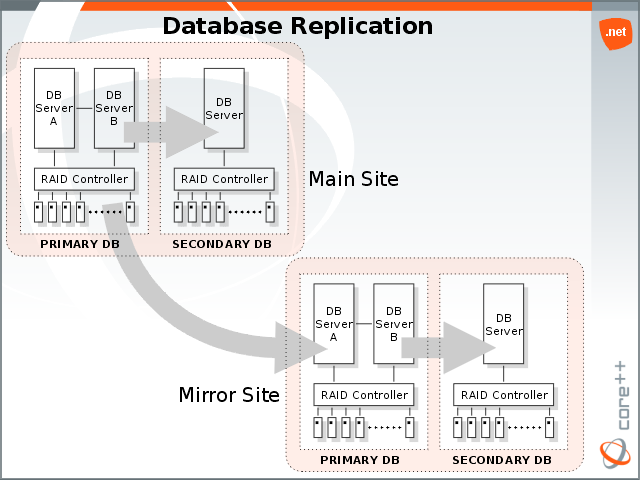
(v) Database capabilities including database software, size, throughput, scalability, procedures for object creation, editing, and deletion, change notifications, registrar transfer procedures, grace period implementation , availability of system with respect to unplanned outage time, response time performance; ability to handle current volumes and expected growth and reporting capabilities. | ||
 | ||
|
(vi) Geographic network coverage, including physically diverse sites and support of growing and emerging markets. | ||
| ||
|
(vii) Zone file generation including procedures for changes, editing by registrars and updates. Address frequency, security, process, interface, user authentication, logging and data back-up. | ||
| ||
|
(viii) Zone file distribution and publication. Locations of name servers, procedures for and means of distributing zone files to them. | ||
| ||
|
(ix) Billing and collection systems. Technical characteristics, system security, accessibility. | ||
| ||
|
(x) Backup. Describe frequency and procedures for backup of data. Describe hardware and systems used, data format, identity of suggested escrow agent(s) and procedures for retrieval of data/rebuild of database. | ||
| ||
|
(xi) Escrow. Describe arrangements for data escrow, or equivalent data backup security, data formats, insurance arrangements and backup plans for data recovery. | ||
| ||
|
(xii) Publicly accessible WHOIS service. Address software and hardware, connection speed, search capabilities and coordination with other WHOIS systems. Frequency of WHOIS updates, availability and processing times. Identify whether you propose to use a “thick” registry model or “thin” registry model, and explain why you believe your choice is preferable. | ||
| ||
|
(xiii) System security and physical security. Technical and physical capabilities and procedures to prevent system hacks, break-ins, data tampering and other disruptions to operations. The applicant's response to Part 2, Section 5, Subsection b, Question xiii will remain confidential to ICANN and the independent evaluators. ICANN will use reasonable efforts to avoid publication or release of this information, but in no circumstance will ICANN's liability for any release of this information exceed the amount of the application fee. | ||
|
||
|
(xiv) Peak capacities. Technical capability for handling a
larger-than-projected demand for registration or load. Effects on load on
servers, databases, back-up systems, support systems, escrow systems,
maintenance and personnel. | ||
| ||
|
(xv) System reliability. Define, analyze and quantify quality of service. | ||
| ||
|
(xvi) System outage prevention. Procedures for problem detection, redundancy of all systems, backup power supply, facility security and technical security. Outline the availability of backup software, operating system and hardware. Outline system monitoring, technical maintenance staff and server locations. | ||
| ||
|
(xvii) Ability to support current feature functionality of .NET (to the extent publicly or otherwise available to the applicant, including IDNs, support of IPv6, DNSSEC. | ||
| ||
|
(xviii) System recovery procedures. Procedures for restoring the system to operation in the event of a system outage, both expected and unexpected. Identify redundant/diverse systems for providing service in the event of an outage and describe the process for recovery from various types of failures. Describe the training of technical staff that will perform these tasks, the availability and backup of software and operating systems needed to restore the system to operation and the availability of the hardware needed to restore and run the system. Describe backup electrical power systems and the projected time for system restoration. Describe procedures for testing the process of restoring the system to operation in the event of an outage, the documentation kept on system outages and on potential system problems that could result in outages. | ||
| ||
|
(xix) Technical and other support. Support for registrars and for Internet users and registrants. Describe technical help systems, personnel accessibility, web-based, telephone and other support services to be offered, time availability of support and language-availability of support. Ability to support new and emerging technologies. | ||
| ||
6. Security and Stability
Criteria: The entity chosen to operate the .NET registry must: (i) maintain .NET registry functions efficiently and reliably, (ii) demonstrate disaster recovery capability and (iii) deliver high quality of service for all .NET users worldwide. Providing documentation for procedures insuring a very high level of security and stability is an absolute criterion.
(a) Provision for Registry Failure. Describe in detail how you would assure continuity of operations in the event of operational failure of the registry and make provision for contingencies and a failsafe back-up plan. A commitment to provide ICANN with escrowed data, in and of itself, will not satisfy the absolute criterion.
|
(b) Provision for Business Failure. Describe in detail what advance arrangements you will implement to ensure that, if your operation of the .NET registry becomes financially non-viable, the registry operations will be quickly, smoothly and efficiently transferred to another operator so as to minimize disruption of the registry functions.
|
(c) Describe in detail your arrangements to provide a secure environment in which the registry infrastructure is to be operated.
The applicant's response to Part 2, Section 6, Question c will remain confidential to ICANN and the independent evaluators. ICANN will use reasonable efforts to avoid publication or release of this information, but in no circumstance will ICANN's liability for any release of this information exceed the amount of the application fee.
| ||
7. Additional Relative Criteria
The following are additional relative criteria: (i) the degree to which the applicant’s proposal promotes competition in the registration of domain names, (ii) the degree to which an applicant’s business model relies on multiple, rather than sole source, suppliers, to reduce the impact of failure by any one supplier, and (iii) the degree to which an applicant’s proposal results in improved implementation of, and support for, GNSO policies, such as transfers and deletes.
Provide a detailed explanation of the manner and degree to which your proposal accomplishes the three relative criteria described above.
| ||
8. Transition and Migration Plans
Criteria: Applicants should document their plan for (i) migrating .NET from the current registry operator (if applicable) with specific attention paid to maintaining existing functional capabilities as defined at the time of the RFP, including the existing RRP and (ii) for implementing support for Version 1.0 of EPP.
Present a detailed plan for the transition of the registry function from the current facilities and services provided by VeriSign, Inc., to the facilities and services you propose. Issues that should be discussed in this detailed plan include:
 | ||
Provide a detailed description of your plan for supporting RRP at the time of transition, for supporting EPP 1.0, and for providing registrars with a smooth, low-cost migration path from RRP to EPP.
| ||
Please check that you have completed all the following steps to ensure you have fulfilled the requirements of the Request for Proposals:
When you complete this application and finalize it for sending to ICANN, you will need to confirm the following:
| Signature: | ___________________________________________________________________________ |
| Title: | ___________________________________________________________________________ |
| Organization: | ___________________________________________________________________________ |
| Date: | ___________________________________________________________________________ |
Please report any problems with this application to
net-rfp@icann.org
© 2005 The Internet Corporation for Assigned Names and Numbers